Creamer Media’s Engineering News Online
Advanced Search


We have detected that the browser you are using is no longer supported. As a result, some content may not display correctly.
We suggest that you upgrade to the latest version of any of the following browsers:
         
close notification
powered by
GOLD 1391.06 $/ozChange: 2.81
PLATINUM 1459.50 $/ozChange: 1.00
R/$ exchange 9.56Change: 0.02
R/€ exchange 12.41Change: -0.11


14/09/2012 (On-The-Air)
 
14th September 2012
TEXT SIZE
Text Smaller Disabled Text Bigger
 

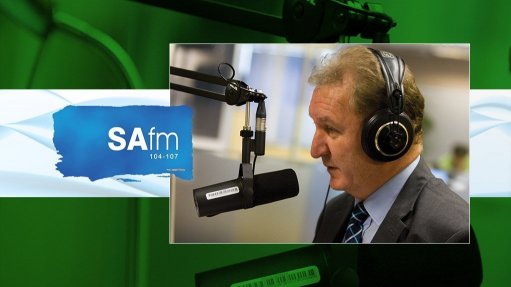
Every Friday morning, SAfm’s AMLive’s radio anchor Xolani Gwala speaks to Martin Creamer, publishing editor of Engineering News and Mining Weekly. Reported here is this Friday’s At the Coalface transcript:

Gwala: The Japanese have officially signed off on South Africa becoming Nissan’s bakkie manufacturing hub for the entire continent of Africa.

Creamer: This is the one-ton pick up and they are looking now to produce 100 000 of those a year coming out of the Rosslyn plant from 2014.

This is with the full blessing of the Japanese who now see a very interesting market for this South African manufacture with a lot going into Africa. The Japanese were here in full force.

This is not only going to look at the production set-up but it is going to be a higher local content. So they want to lift the local content of this bakkie, [which] will go from half to 70%, which means now that we are going to have additional component manufactured locally. The actual direct employment here will be 800 additional jobs.

When you look down the line at all the service industries coming in and the new components set up, it is more like 4 000 new jobs. At the same time they are going in with the Gauteng government and spending R200-million on a new training centre, so they want to get those skills ready for expansion here.

The Japanese are quite ambitious at the moment, particularly Nissan. The executives that are out here said they built 4,8-million cars last year, but they want to build 5,3-million this year. They want a large chunk of that to go into Africa. At the moment pick-ups are built in Spain and Thailand, as well as South Africa.

The big scope now is to expand South Africa as part of this overall plan of the Japanese to move heavily as an expansion phase with an eye on Africa.

Gwala: The respected McKinsey global consultancy group calculates that Africa has the potential to create 72-million jobs in the next eight years.

Creamer: Eight years is not a long time. They are talking about 2020 and they say the trend at the moment is that we are sitting on a continent which is the second-fastest growing region after Asia, growing at 5,1% compared with Asia’s 8,6%. As things stand now with the prevailing trends there should be 54-million new jobs.

If the governments can just tweak this by making their macro-economics a little bit more attractive and doing things with infrastructure, they can lift that to 72-million jobs in eight years. The big advantage here is to try and get this demographic dividend.

There are young people coming through and although only 42% of them at the moment have secondary and tertiary education, in eight years time almost half of those young people coming through the system will have secondary and tertiary education, which makes them highly employable.

They feel that the areas where these people should really look to is agriculture, because there is a lot of comparative advantage and there could be a lot of spin-off for agroprocessing, but also manufacturing, hospitality and retail.

They do feel that Africa could do more, that is why they are saying accelerate this business but get your infrastructure better, because countries like Thailand, South Korea and Brazil, when they were at the same level of development as Africa, they were actually doubling and trebling the rate of jobs, which they feel the African continent could do but is falling behind.

Gwala: 72-million jobs in the next eight years, that means we will be pretty much close to securing that everyone who needs a job has one.

Creamer: They are talking about wage-earning jobs, you find in Africa these will be wage-earning jobs as well. Because jobs are classified quite strangely in Africa not always wage-earning jobs. So there is a different definition there.

Gwala: South Africa’s highest-technology company is throwing its full weight behind creating a massive ‘Secunda-scale’ complex in the United States of America.

Creamer: We are talking about Sasol and because of this technology they can convert, as we have been doing it, coal into liquid fuels and chemicals. The big thing now is the shale-gale: shale-gas in America.

They want to capitalise on that and the state of Louisiana is very happy with this technology that Sasol can provide, because they have the shale-gas and there is this arbitrage opportunity because the shale-gas is low in price at the moment and its all about natural gases being previously expensive until shale-gas came along and lowered the price.

Then you have got the oil price, which is high level. So what Sasol can do is create the liquid fuels that you normally get from crude oil, but you are using the gas, so it is more environmentally friendly and, at the same time, you get an opportunity to produce chemicals as well.

The government of Louisiana is over the moon. It is probably an example for our government because here you get a foreign situation appreciating this technology that Sasol’s got and rolling out the red-carpet to an extent that the Louisiana governor Bobby Gindal, has visited their operations three times already to see for himself. What he wants is jobs and he believes out of this he can get 7 000 jobs, but the spin-off is the big thing.

They are realising in Louisiana that when you develop your own resources and you add value to your own resources like the gases that they’ve got it has massive implications for your economy.

We know that it would help us now if Sasol was expanding here, because we can see our current account deficit worsening and that is a huge role that someone like Sasol plays, because they produce that fuel inside the country so the money is not going out.

But, in South Africa unfortunately, Sasol as gone ex-growth. We jump up and down and say, “yay, they are putting in a new coal mine”, that is just a replacement mine, there is no growth there.

So since these climate change scares they have been frozen into immobility because they have got no solution to the carbon capture and storage. They are putting a lot of carbon into the air and they don’t want to put more into the air, therefore they don’t expand. T

hey were looking at Limpopo where they had the Project Mafutha, that is on hold, because again they haven’t cracked the code when it comes to carbon capture and storage and they want to do that before they get going because there is too much risk for them. Particularly South Africa is also committed itself not to increasing carbon into the atmosphere.

That is a pity for us because we have got this company with the technology, but we haven’t got the gas. Of course, we’ve got in the Karoo if they could firm that up and we know Sasol is exploring there and hopefully one day we will get more gas there, and maybe also for Project Mafutha in Limpopo if they could get some of the coal-bed methane gas. In the meantime, Sasol has gone ex-growth here but huge growth going into North America.

Gwala: Thanks very much. Martin Creamer is publishing editor of Engineering News and Mining Weekly, he’ll be back with us at the same time next week.


Edited by: Creamer Media Reporter


To subscribe to Engineering News's print magazine email subscriptions@creamermedia.co.za or buy now.

FULL Access to Mining Weekly and Engineering News - Subscribe Now!
Subscribe Now Login


safm14sept2012
GET SELECTED AUDIOCLIP
Embed
This article's audio Download (8.44mb)