Creamer Media’s Engineering News Online
Advanced Search


We have detected that the browser you are using is no longer supported. As a result, some content may not display correctly.
We suggest that you upgrade to the latest version of any of the following browsers:
         
close notification
powered by
GOLD 1391.38 $/ozChange: 4.08
PLATINUM 1455.50 $/ozChange: 2.00
R/$ exchange 9.60Change: -0.05
R/€ exchange 12.40Change: -0.07


09/04/2010 (On-The-Air)
 
9th April 2010
TEXT SIZE
Text Smaller Disabled Text Bigger
 

Every Friday morning, SAfm's AMLive's radio anchor Florence Letoaba speaks to Martin Creamer, publishing editor of Engineering News and Mining Weekly. Reported here is this Friday's At the Coalface transcript:

Letoaba: South Africa has an opportunity to become a centre of mining finance for Africa, but needs to remove two obstacles first. Tell us about this.

Creamer: This was a fantastic revelation that was made by a fantastic South African. He gave a wonderful talk at Wits Business School this week and his name is Mick Davis.

He used to run Eskom, but he is now running Xstrata, which is listed on the London Stock Exchange and he has turned it in eight years into a $50-billion value company.

So, he actually knows what is happening in the world and what he is saying is that it is just a matter of time before the prodigious Africa starts to produce a lot of copper, metals and minerals, because the world needs these.

We are still in the super cycle even though there was the meltdown it didn't melt the super cycle. He is saying that Johannesburg, South Africa has got this fantastic opportunity to be the finance centre for these mining activities, but it has to allow full indexation of a company like his, or big majors on the Johannesburg Stock Exchange.

It isn't possible at the moment, because some archaic regulations are stopping it. He also says that it is extremely important that the country gets rid of its exchange control, so that money can flow in and out.

He says that in exchange for that we will become a finance hub and he reminds us that it wasn't long ago that London didn't have a big mining sector, but they didn't have any barriers to entry. If we can drop these barriers to entry it will be a fantastic opportunity for us to be the financier of mining in Africa.

Letoaba: The introduction of a "teach first" programme is being advocated to boost South Africa's falling education standards. How will this be done?

Creamer: ‘Teach first' is a wonderful concept first introduced in the United States. It goes back to what John F Kennedy said, think of what you can do for your country. That is what we have got to ask ourselves here in South Africa if we are going to get through this very big skills challenge.

What they did is that they introduced ‘teach first'. So, your top graduates coming out of universities are hand picked and the big companies subvent their salaries. But, for two years these people go out and they teach at schools, particularly challenged schools.

They become models for youth to be inspired by, but they also, and it has been proved that they've lifted the maths and the science. It is a quick thing. We know we have got to have teachers educated here, we have the teachers training college, but it is a longer-term thing.

That has got to be done. You have also got to recall retired teachers to get involved, but what can we do in the meantime. We can have this ‘teach first', which can be implemented next year, where people before going embarking on their careers, the top students, the top graduates, work in schools as teachers for couple of years to boost our education.

Letoaba: There is an "urgent" need for South Africa to invest billions of rands in bulk water infrastructure. What is this about?

Creamer: This is again to make sure that we don't lose out on the great mining boom that is still continuing as I'm saying, this super cycle is still in process, the meltdown didn't actually stop it.

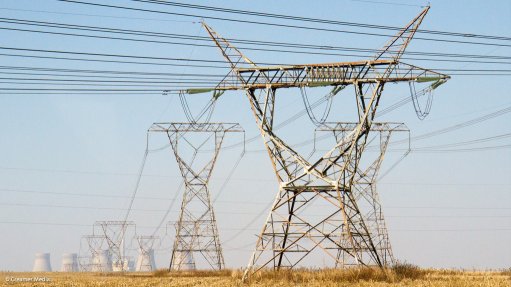
We have got to make sure that from a government point of view, all the infrastructure that is needed for our country to prosper is there. You remember the warnings that came about electricity, the country was warned that we are going to run into an electricity problem, we have got that now.

Now, we are getting warnings from the same mining fraternity that we need bulk water infrastructure and reticulation. If this doesn't come in a big way, communities are going to be at industries throat and mining industries throat, because we are going to have a water scarcity situation.

They are saying and even estimate that we are going to have to spend R100-billion, an enormous amount of money. This is necessary so that our country can flourish and we need to heed this warning because we see the other countries and how well they facilitate industry and mining.

Chile, which was the big copper producer, grew from 2001 to 2008, by 12% a year compound growth in the mining sector, because it has all these things ready for mining activities. What happened in South Africa, we are a mining country between 2001 and 2008 we shrank from a mining point view by 1%.

We don't want to do that again and we must be prepared for the next boom and now they are warning us about the need for more bulk water infrastructure.

The State has got to do it, although the private sector came in to help with electricity and can own, generate and do it cheaper then Eskom and when it comes to transport that they run their locomotives on a rail that belongs to the State. But when it comes to water, they say to the State, that is your baby, you have to control that.

Letoaba: Thanks very much. Martin Creamer is publishing editor of Engineering News and Mining Weekly, he'll be back with us at the same time next week.


Edited by: Creamer Media Reporter


To subscribe to Engineering News's print magazine email subscriptions@creamermedia.co.za or buy now.

FULL Access to Mining Weekly and Engineering News - Subscribe Now!
Subscribe Now Login


podsafm_09042010
GET SELECTED AUDIOCLIP
Embed
This article's audio Download (6.35mb)
 
Florence Letoaba
 

Florence Letoaba