Creamer Media’s Engineering News Online
Advanced Search


We have detected that the browser you are using is no longer supported. As a result, some content may not display correctly.
We suggest that you upgrade to the latest version of any of the following browsers:
         
close notification
powered by
GOLD 1360.10 $/ozChange: -5.72
PLATINUM 1455.00 $/ozChange: -6.70
R/$ exchange 9.40Change: -0.09
R/€ exchange 12.07Change: -0.07


03/02/2012 (On-The-Air)
 
3rd February 2012
TEXT SIZE
Text Smaller Disabled Text Bigger
 

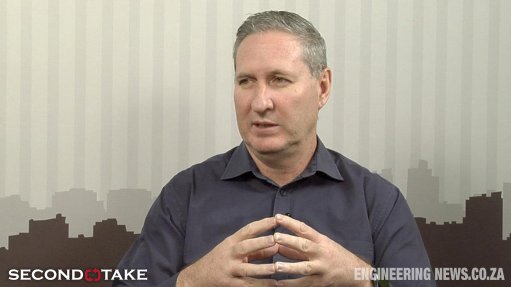
Every Friday morning, SAfm’s AMLive’s radio anchor Xolani Gwala speaks to Martin Creamer, publishing editor of Engineering News and Mining Weekly. Reported here is this Friday’s At the Coalface transcript:

Gwala: The recovery of millions of ounces of gold from old West Rand mine dumps is poised to get the go-ahead.

Creamer: This is like Ergo 2. Remember Ergo 35 years ago on the East Rand, the shareholders are still smiling from the billions of rands that they managed to get out of recovering gold, uranium and even sulphuric acid from those mine dumps.

There is a lot of value in them and now they are looking to the west. Why not do this on the west where we have the major there, which is Gold Fields linking up with relatively mid-tier company Gold One, which is now Chinese-controlled.

They are studying the possibility of actually combining the efforts to mine together. That will take up 60% of the dumps on the West Rand the remaining 40% is left with AngloGold Ashanti.

Perhaps AngloGold will also come in to it in time because one of the secrets of doing this is to turn this gold recovery into a veritable factory. You need a big volume of dump material coming through and that's when your unit costs go down and your profits go up.

As I say, the people that were investors in Ergo, 35 years ago and beyond, they are still smiling and we still see DRDGold, which took over from the big Anglo American on the East Rand continuing to get good value out of the dumps on the East Rand. Now, hopefully they will do the same on the West Rand.

Gwala: The government is going all out to halt South Africa’s deindustrialisation and set the country on a new path of reindustrialisation.

Creamer: Critical for us to increase our industrial footprint. We had a very big industrial footprint in South Africa, which shrunk considerably and now they are trying to rebuild it. You need some government intervention to get things going.

They are staring off here with this Preferential Procurement Act, the regulation of which became effective late last year, so that they can actually designate products that must be made here. In other words, the government won’t buy these products unless they are made in South Africa, which gives you a starting point.

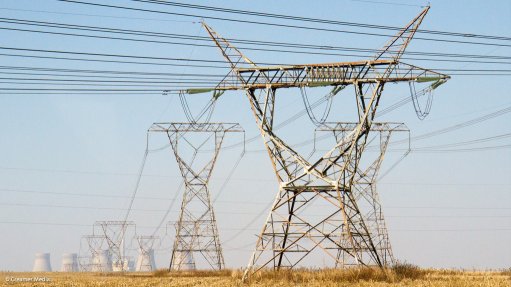
The designated products, there is a long list of them, but I can say power pylons, trains, buses, set-top boxes. In other words, when they buy those, they must have a local manufacturing content. That is the stipulation for the purchase.

This in a way gives comfort to local manufacturers, they can then start investing, because they know that there is going to be a big purchaser in the form of the government. Then there has been an accord with 84 big companies, so the government is saying that they must not only do this on their own, we must go in to the private sector.

They had this accord last year where all parties to this accord including the 84 of South Africa’s largest companies, are saying that they will do their best to procure from these local companies. Then you get that multiply affect. We know that there are other competitive juices that must flow, of course.

We see China in a very good position because they don’t allow their currency to float and in a way by not allowing their currency to float, they have an artificially low currency. This gives them tremendous competitiveness and they look good even when they are not really that good. A little country like South Africa floats it currency, it bobs around like a cork on a big ocean, which is very tough for the local manufacturers.

You need a competitive rand and you also don’t need the government to say that they will only buy South African because that can make people lazy. So, in this legislation, they can also undesignate. If they find that there are no competitive juices in these products that they have designated as being locally manufactured, they can undesignate that to create the competitive situation.

They are trying to keep the competitiveness in it, so they have been thinking about it quite extensively. They are getting backing from manufactures. There are other constraints like the electricity price constraint and also maybe with the toll roads it also has an impact on manufacturing competitiveness.

Gwala: It is such a complex issue especially with the exchange rate, for instance, there are so many views and how do you balance and get a competitive rate that satisfies everyone.
All roads will lead to Cape Town next week when people from all over the world descend on the Mother City for South Africa’s 18th Mining Indaba.

Creamer: This is amazing that there has been 18 Mining Indaba’s. It has been a huge success story. Foreign investors came in and they created this and chose Cape Town as the place to have the African Mining Indaba. Every year more and more people arrive from all over the world.

There are 45 different countries being represented this year, 30 government delegations will come down and about 6 500 people. You can almost see the tangible deal doing.

When you go there you know that people have arrived who need money and you know that people are there with money. You can see this intensive engagement that leads to long-term investment, of course.

They take decisions in principle there to work together, they go and do their studies and billions of rands have gone in to investment in Africa as a result of the interface at the Mining Indaba in Cape Town. Now we see the word Indaba beginning to migrate.

We are starting to export the term Indaba, because this same group now from this year will have an Asian Indaba and that will take place in Singapore late in October. We can see that the success has been so great that they even are able to export this name and try and re-create the same sort of atmosphere in Singapore and Asia with the Asian Indaba.

Gwala: Well together with the name we would like to export some finished products as well. Thanks very much. Martin Creamer is publishing editor of Engineering News and Mining Weekly, he’ll be back with us at the same time next week.

Edited by: Creamer Media Reporter


To subscribe to Engineering News's print magazine email subscriptions@creamermedia.co.za or buy now.

FULL Access to Mining Weekly and Engineering News - Subscribe Now!
Subscribe Now Login


safmpod_03022012
GET SELECTED AUDIOCLIP
Embed
This article's audio Download (7.13mb)
 
Xolani Gwala
 

Xolani Gwala